Truncated Sutro
Postcard from 1972 via @TransAmericaBld — notice anything different?
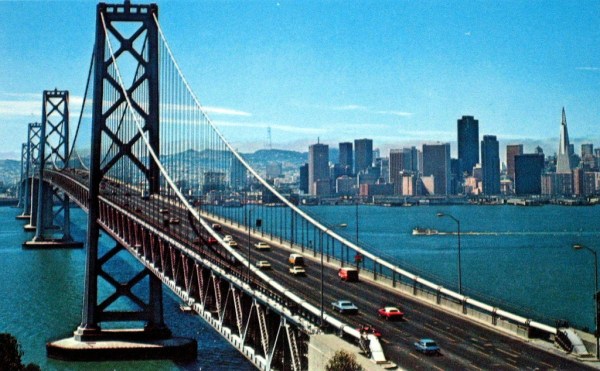
(photo via Flickr/Target Man 2000)
Cool cars? Check.
Volkswagen Van? Check.
TransAmerica Pyramid? Check.
Sutro Tower? Wha?
Let’s zoom in a bit.
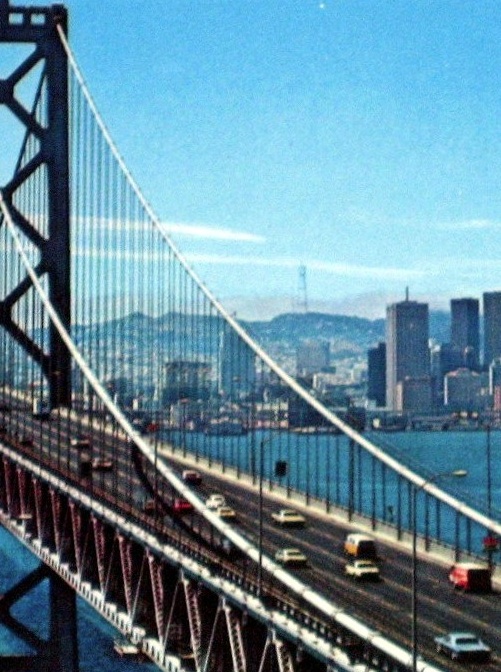
CSI Image Enhancement (aka playing around with contrast):
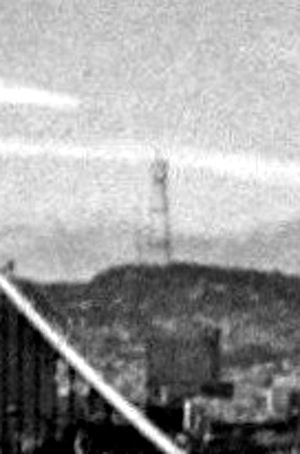
Sharpen and clarify!
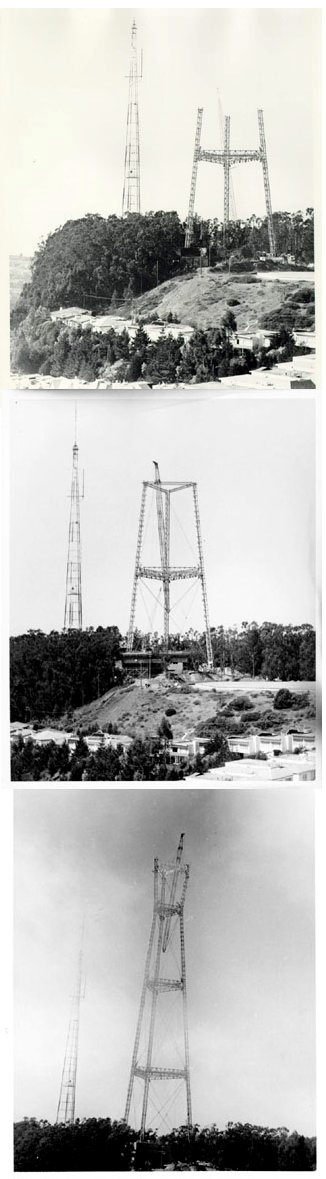
We’ve seen this before — Sutro’s baby photos!
That last photo is dated August 15, 1972.
Live, One Night Only
Want to see me blather on about La Lengua and Bernal in the 1860s-1880s? Now’s your chance! The kind folks at the Bernal History Project have invited me to commandeer their monthly session for revolutionary historical purposes. (Fair warning: you know how my posts tend to ramble.)
Tonight, 7PM, Bernal Library, 500 Cortland Avenue. Maps, pictures, and whatever else I think of in the next few hours.
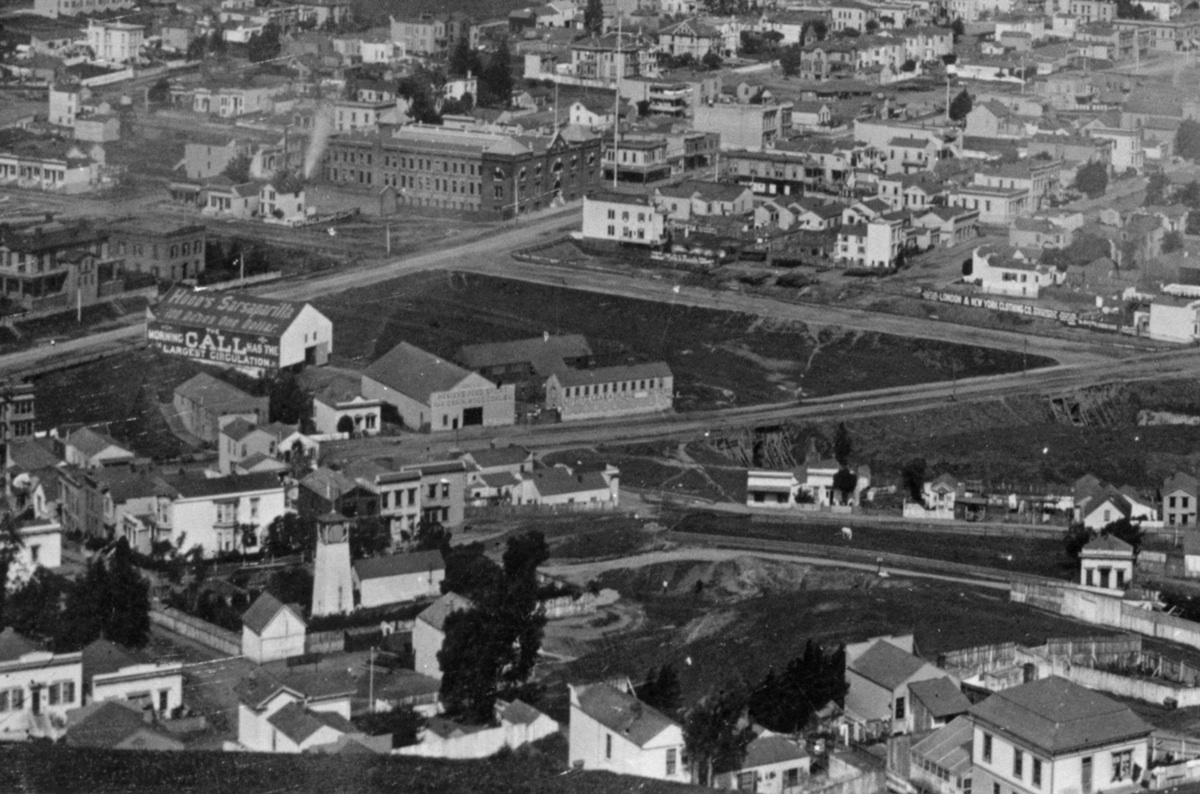
(La Lengua from the top of Bernal, 1888)
All La Lengua residents — be prepared to sing the Ballad of Revolutionary Glory (sung to La Bamba)
Para vivir La Lengua
Para vivir La Lengua
Se necesita el mapa antiguo.
Un puñado de mapas
Para mí para tí
Y burrito y cerveza
Yo no soy historador
Yo no soy historador
Soy burritador, soy burritador, soy burritador
A Town in Japan
Atlantic Magazine’s In Focus page showed these horrific Reuters / Kyodo photos of the tsunami coming ashore in Natori City, southeast of Sendai.
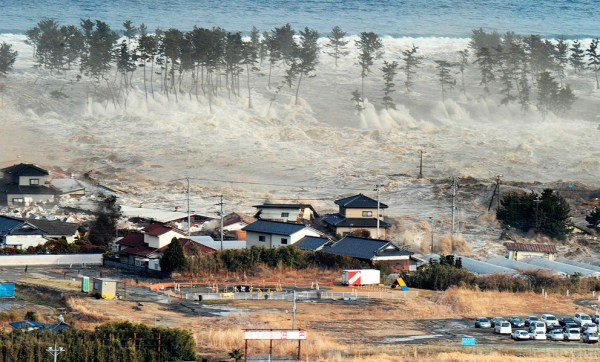
The wall of water has ripped through the trees and is hitting the first rows of houses.

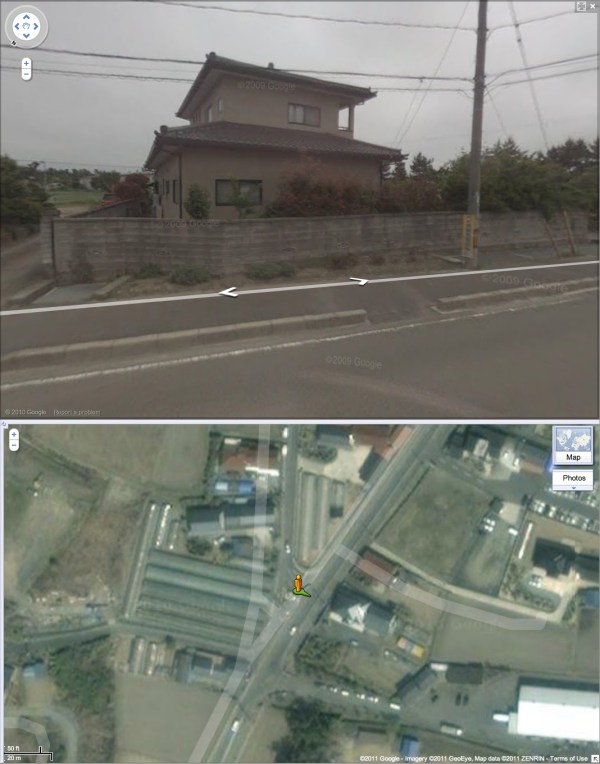
That tan house is visible in Google Street View.
This heartbreaking NHK helicopter footage shows the tsumami waters encroaching fields and swallowing towns. The first zoomed shots at the 1 minute mark (15:51 local) are on the north side of the Natori river in the town of Yashiki. The houses and barns and debris get pushed into Ipponmatsu and then towards Ichibee where the waters push up against a levee and spare Sendai-Tobu bridge at the 2 minute mark.

The helicopter pans over to the south side of the Natori river where houses on fire cross fields and canals and approach Yuriage and Kozukahara, engulfing roads and cutting off drivers.

Within 7 minutes, the water had reached the Quonset hut (outlined in red above). Visible in Google Street view, it is the Machida Corporation. Across the street is the Yuriage Elementary school (in yellow above). Like most Japanese schools, it is two stories — I hope that was enough.

I believe these Flickr photos by “hey mr. eric” are of Yuriage, or an elementary school near by. (This is may have been taken by a teacher in the JET program which puts western English teachers in Japanese public schools.)
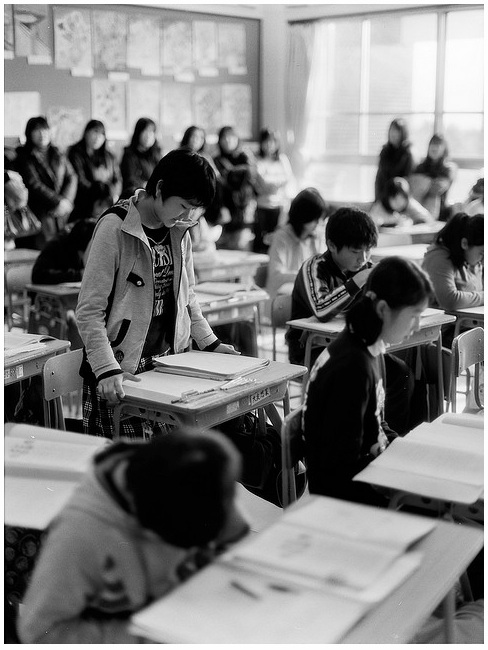
20 years ago I lived in Japan, working on the JET program in an agricultural neighborhood very similar to Natori and Yuriage. I rode my bike by houses just like that, past fields just like that. I assure you there are beer machines just down the road, just past the dry cleaning shop, with a grocery store around the corner.
On the way to my high school I would walk by the elementary school. I don’t know if you have ever had 500 children running towards you yelling “THIS IS A PEN”, but I have. Cute, rather surreal, but mildly disruptive for all involved. I had to change my route to work after a while.
In the grocery store, the locals would watch a tall foreigner shop with fascinated curiosity, but immediately jumped to help him as he puzzled over the mysteries of Japanese packaging. They would proudly point out how the bag of potatoes contained a picture of the farmer who grew them.
I once had five people help me buy bleach. I had no idea what the word for bleach was, but as I struggled to explain in Japanese that I needed a fluid that made white things more white, I could see the light bulb go off in one guy’s head. He dragged me over to the proper section, pantomiming getting his white shirt dirty, pouring the bleach and shielding his eyes from the brilliance.
In the dry cleaning shop, I would have hysterical half hour conversations with the owner, neither of us speaking each others language to any meaningful degree, but with her English dictionary and my Japanese dictionary we couldn’t be stopped. Only after 6 months did I discover that her daughter was in my English class at the local high school — she would hide when I came in to pick up my shirts each week.
Through my kitchen window I would hear my neighbors give their two year old his bath, the father counting to ten, his son repeating after him, both laughing.
15 minutes warning would simply not have been enough time for those people.
We’ve all seen the classic shot of the Willows, a 19th century Mission beer parlor between what would be Mission and Valencia on 18th:
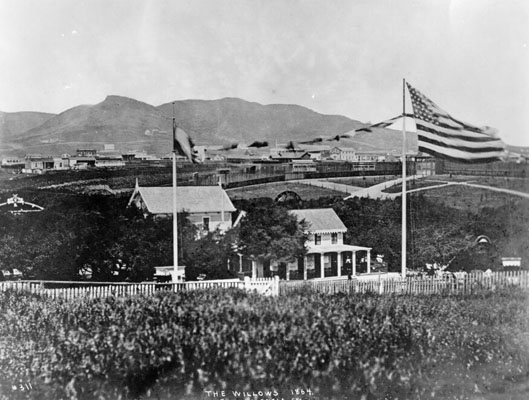
I’ve previously written about the Willows and the 18th St. Gulch (aka Gulchie, the Valencia St Hotel eating monster). But architect Glen Lym has taken it to the next level. You know those contour lines on the 1853 and 1859 US Coast Survey maps I traced in such brutalist fashion?
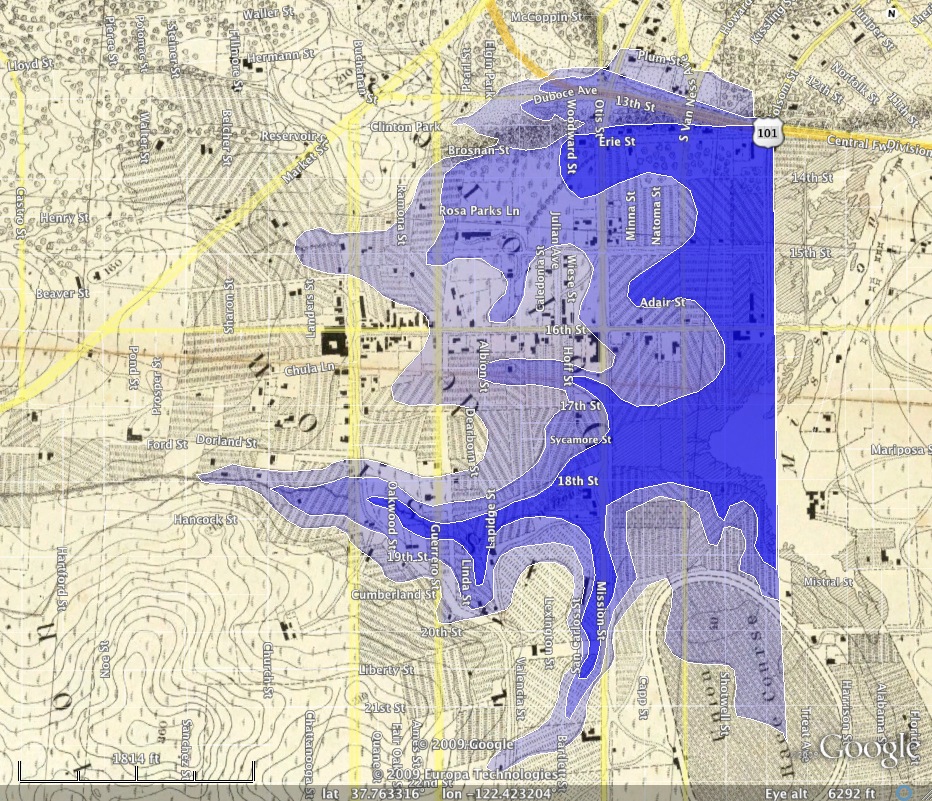

Our esteemed architect has taken the map into THE THIRD DIMENSION and made a freakin’ CAD model of 1850s San Francisco. Looking northeast:

Here we are looking west at the Willows, with Mission Dolores and Twin Peaks in the background (along with what will become Dolores Park):
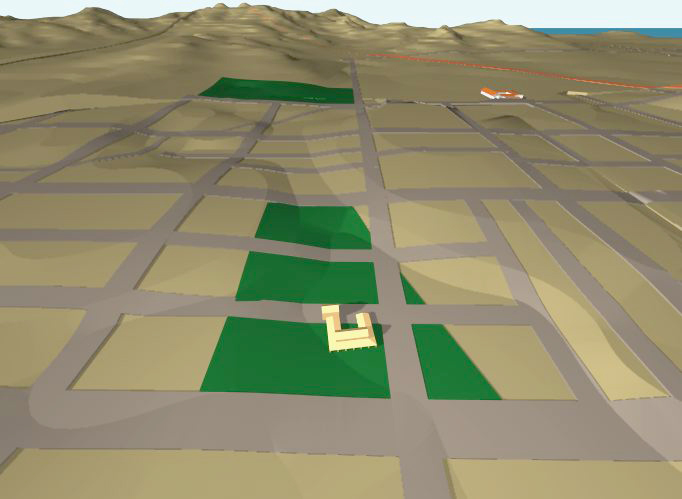
Modern streets are overlaid on the map. To the right of the Willows is 18th. The street in front is Mission, then San Carlos / Lexington / Valencia. Glen notes, “Funny that The Commonwealth restaurant now sort of sits on top of where The Willows used to be.”
A lower view to give you a better sense of the depth of the ravine:
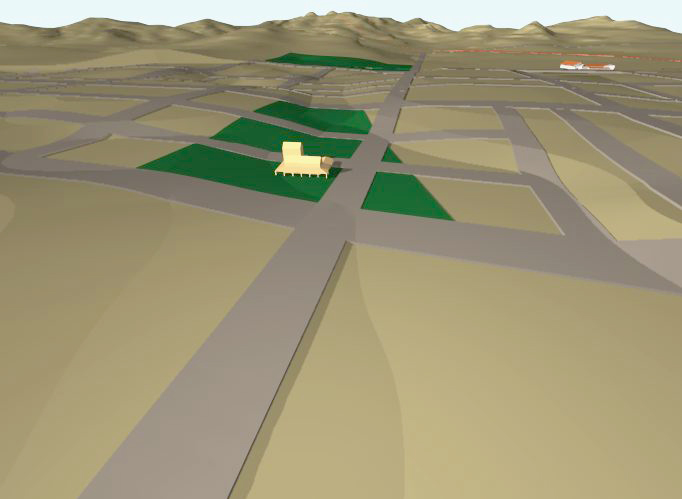
and its proximity to Mission Creek.

Here’s an overview of the Mission, looking north, from above 24th and South Van Ness.
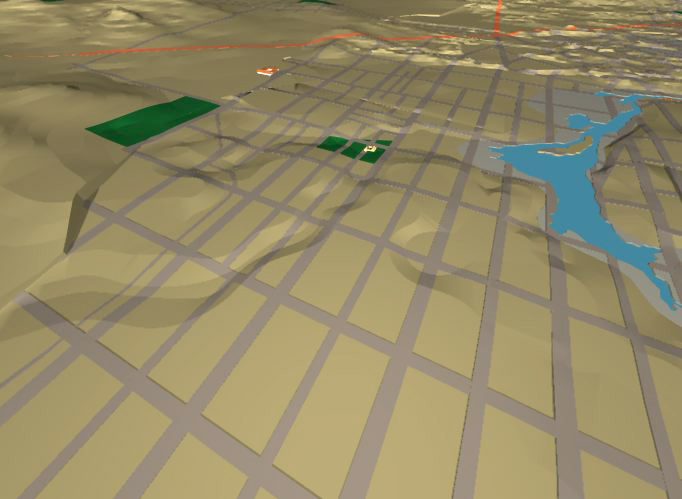
The dunes that Market St had to cut through are quite evident at the top of the picture. The big flat area in the forground was the home to the Union Race Course.
It’s hard to grasp the size of the Mission’s ravines — the best analogy I can come up with is to stand at 27th and Guerrero and look north towards Cesar Chavez. Imagine twice the depth in half the distance.
Man, what I would give to have a beer at the Willows. Here’s an old ad:

(via SFPL)
I can only assume Miss Lotta is the fountain‘s namesake, Lotta Crabtree.
But wait — skating and beer?!‽ (Ocean Beach, I just topped your ghost ice rink.) The Willows was evidently run by Canadians. (Seriously, Canadian-San Franciscans, let’s get a new rink in the Mission. Or at least a street hockey game as a float in the Carnaval parade. That would be pretty sweet.)
Via the California Digital Newspaper Archive we find some more ads for the Willows.
1857 – new shells walks! Hansome summer houses! All kinds of refreshments!
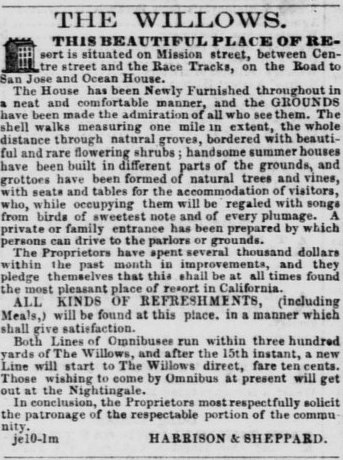
Notice the omnibus references — It looks like this ad was announcing the opening of the omnibus line from downtown. (Previously you had to get out at the Nightingale on Mission and 16th – a little more on that area here.)

(via SFPL)
The Willows was popular with the ladies — in the Daily Alta’s gossip column we see the shocking news of a FEMALE equestrian who rode to the Willows!
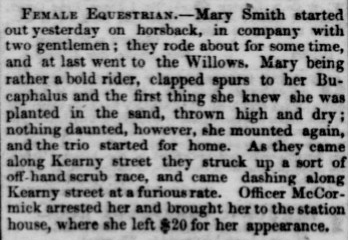
(I guess she got fined for the modern equivalent of drag racing — considering inflation, that $20 in 1857 is like $500 today.)
Getting to the Willows could be hard work — here we have the tale of “clerks” drunk driving on the plank road (maps and pix here) and not quite making it there:
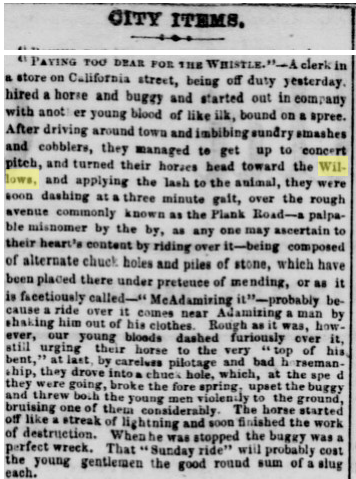
The Willows was also a place of refuge for newsman having a bad day:
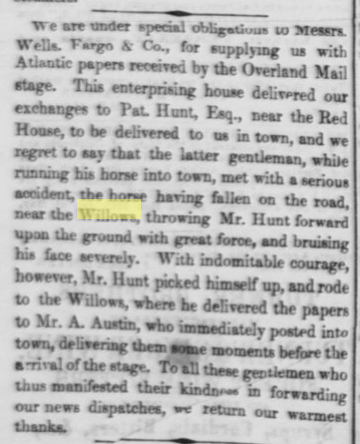
Best to stick to the Omnibus for 25 cents (aka $6 today)
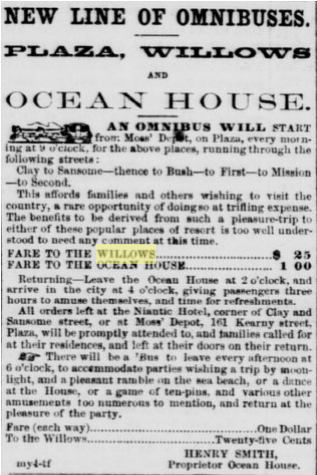
(Ha, “the benefits to be derived are too well understood to need any comment at this time” — I am so using that at work.)
In addition to beer, the Willows also had “barbacue”:
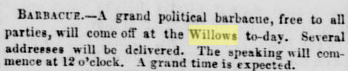
(How can you not have a grand time with beer and BBQ?)
It looks like the Willows got a new owner in 1860, François Pioche, who actually built the Market Street Railway. (I had no idea how much SF infrastructure he financed — how does he not have a street named after him?) Anyway, he made the Willows all fancy.
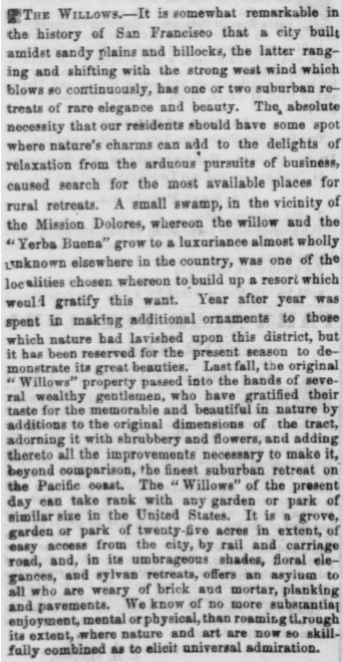
Here in this 1860 ad, we hear about the massive upgrade to the Willows — I suspect this is the building we see in the picture at the top of this increasingly long article. Kitchens! Private saloons! And wait for it…not one, but TWO BOWLING ALLEYS:

The great flood of 1862 (24 inches of rain in one month) hit San Francisco hard — the Mission plank road washed out, the road to San Jose was impassable, a Mission Woolen Mills storage building collapse, 8-10 feet of water in basements downtown, and Mission Creek flooded the Willows:

They quickly rebuilt:
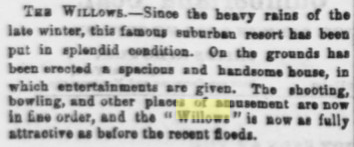
I get the feeling the early 1860s was the heyday of the Willows. I’m not entirely sure when the it shut down, but in 1871 Mark Twain wrote of “the dingy horrors of San Francisco’s pleasure grove, the Willows.” That can’t be good.
Thanks again to Glen Lym and his 3-dimensionality! Also check out Bernalwood’s analysis of the missing hills of Bernal.
A Modest Proposal: Beer Train
Caltrain has problems. With counties not paying their share, a projected $30 million deficit, and no sign of a gas tax, some creative financing is in order. While all sorts of crazy-ass cost reductions are being proposed, I’m of the opinion that you need to make the train more attractive to ride (especially since the walking / Muni / VTA connections at either end are latency- and pain-inducing).
However, I have a suggestion that will both increase ridership and increase revenue from existing passengers: I propose that Caltrain sell beer ON THE TRAINS to raise revenue (and passenger morale).
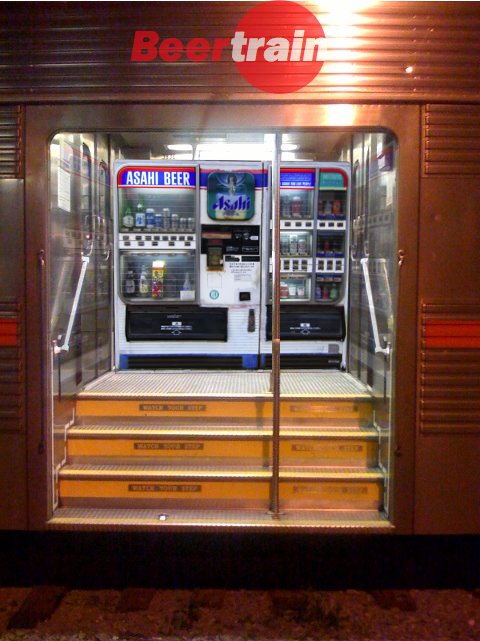
(Beer machine image via pokoroto, Caltrain image via digitalczech)
Anyone who has been to Japan knows the absolute magic of beer machines. They are omnipresent (and quite likely omniscient) and one can buy up to a 2 litre “Big Boy” if necessary. (@SelfEdge reminds us there are also advanced models, but there probably isn’t enough commute time to justify a Caltrain bar car.)
But do not fret — the Caltrain beer machines shall be stocked with local and regional beer — Speakeasy, Anchor, Lagunitas, etc.
Let’s say a regular beer would go for $5, a large for $7, and Caltrain-exclusive beers (like Pliny The Commuter and Anchor Steam Engine) for $9. If everyone who rides the afternoon/evening commuter trains buys a beer, Caltrain will be saved! My math is as follows:
Let’s say there are 50 working weeks a year. This gives us 250 days of high traffic Caltrain secondary revenue opportunities. So we have $120,000 a day that Caltrain needs to make up.
- 2009-2010 ridership was just under 40,000 people per day.
- Each afternoon, there are 5 “bullet” and 9 limited stop trains during afternoon commute hours. (I am assuming people will not drink on the way to work, but boy are there ever days… And the local trains could easily drive you to drink. But I digress.)
- Considering only at the afternoon fast(er) trains, $120k/14 is just about $9K per train.
- I believe 80% of Caltrain’s revenue comes from commuters, so I’m estimating around 15,000 folks on the afternoon/evening commute. That’s close enough to 1000 people per train.
- If everyone buys two regular beers, Caltrain’s deficit will vanish!
- You could even use your Clipper card to buy a beer! (Though if you forgot to tag off you’d probably get charged for a 6-pack.)
OK, so probably not everyone will buy two beers. But this would be a sizeable chunk of revenue. And beer on the car could potentially increase ridership. Then there’s food vendors at each station — why not eat dinner on the train? Also: Japanese coffee machines for the morning commute.
Come on Caltrain, figure this one out, OK?
Rebels 1, Empire 0
The Empire was unprepared for the Rebels’ Hoth-warming strategy:
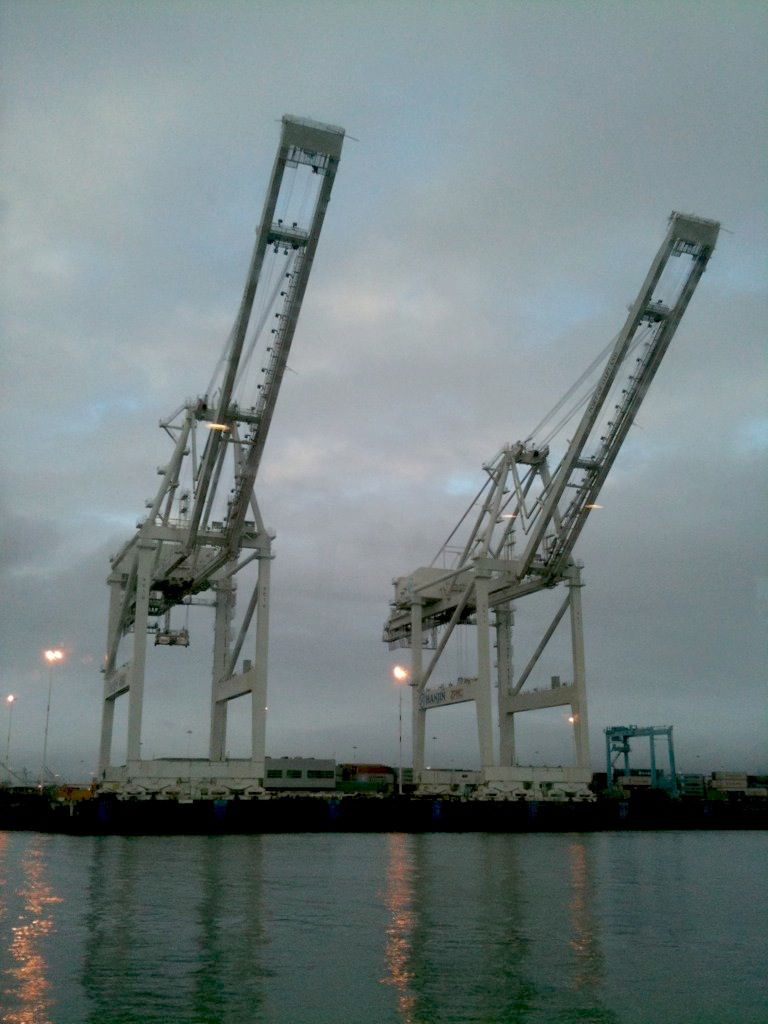
@fredsharples The AT-AT walkers of Oakland harbor
David Campos Hates History (or maybe not)
Bernalwood brings us this frustrating update on the fate of the 1940-era Coca Cola ghost sign:
“Only Supervisor David Campos has yet to weigh in, and yet only he can now save the mural. But after two weeks of uncertainty and controversy, Campos has yet to declare a position. Apparently, this is a difficult decision, so he needs still more time to think about it…”

Since Campos is incapable of doing his job as a Sup, how about we crowdfund Mr. Modolos’ $3400 application fee? (This will also be good practice for funding the candidate who will invariably defeat Campos in the next election.)
UPDATE: Bernalwood presents evidence that not all us lost – David Campos has responded and “wants to inject common sense“. Fingers crossed.
Attention La Lengua, Your Map Is Calling
Behold The Neighborhood Project by the good people at hood.theory.org.
The Neighborhood Project is creating a map of city neighborhoods based on the collective opinions of internet users. Addresses and neighborhood data are translated into latitude and longitude values, and then drawn on the map.

A fundamental flaw of this map is the absence of La Lengua! But do not fear — the LaLeReGeCo (La Lengua Revolutionary Geotagging Council) has discovered that citizens can submit their neighborhood by intersection / address. In fact, it seems that there may already be a few yellow puntos de la lengua on the map.

Anyway, after you enter your cross street, pull down the “Neighborhood” menu to “other” (all the way down the bottom), and enter La Lengua for full maptacular participaction.
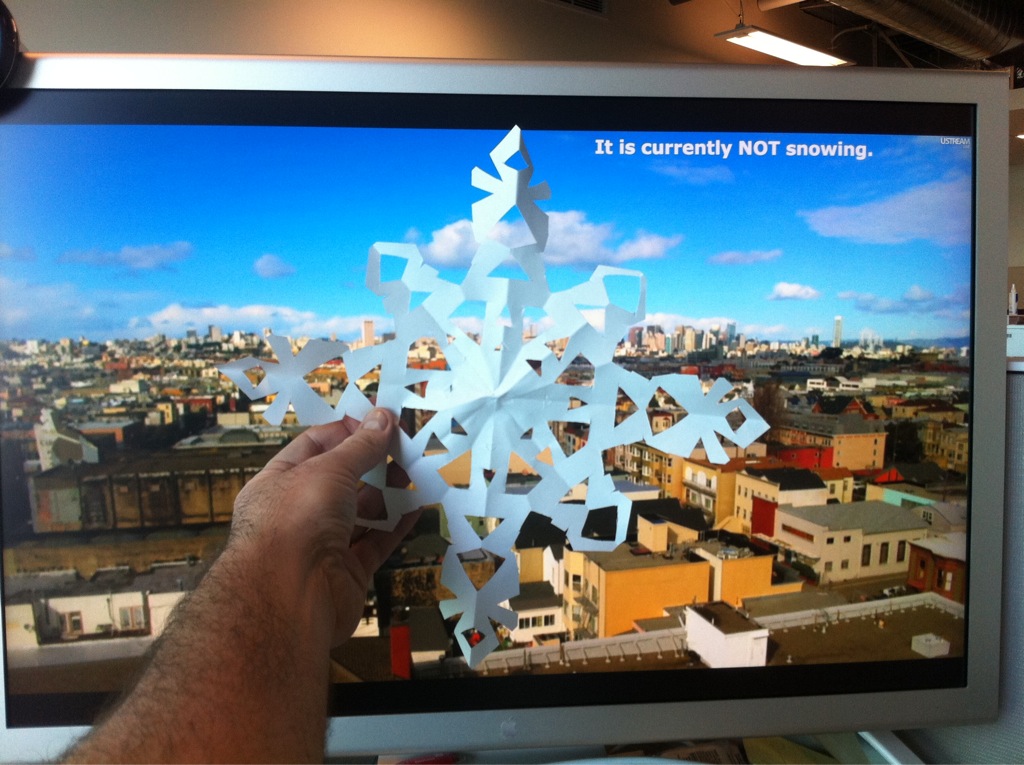
OMG IT’S NOT SNOWING
Coca-Cola, Historic and Refreshing
The battle rages on to prove the historic value of the Coca-Cola mural on the former Tipton’s Grocery in Bernal. Bernalwood received evidence from the owners of the building on how they discovered the mural in 1991 as they removed asbestos siding that was put up between 1949 and 1956.
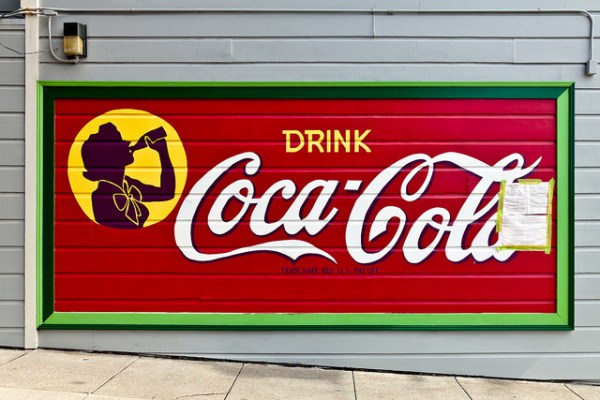
(image via Troy Holden)
We also have word from the official Coca Cola historians and archivist themselves:
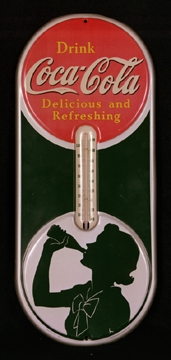
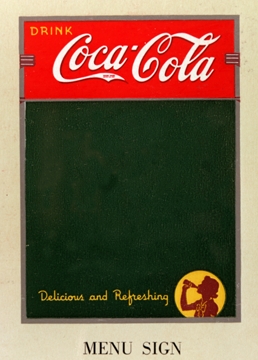
“The girl in the image is referred to in “Coke Lore” as Silhouette Girl. She was used from 1939 until around 1950 when she fell out of use. She is significant in dating items as she was one of the few characters that was used during the time we transitioned our “Trademark Registered” statement from the tale of the C in “Coca” to being placed under the words “Coca-Cola.” This transition occurred between 1941 and 1942.
The first thing I noticed with the sign was the mark was under the words so it had to be later than 1942.
You will note that given the Sanborn Map layout, that sign would have been perfectly positioned with sight lines to qualify as location for a painted wall sign.
Given this evidence, Ted Ryan and the Coca-Cola archivists state:
If you had to pin me to a date, I would say that based on the placement of the word drink and the use of the Silhouette Girl, the original would be from 1946 or so.
Our effervescent archivists were kind enough to send over a bevy of pictures and documentation:
| 1939 Silhouette Girl on a thermometer: | Menu sign: |
 |
 |
| 1950 delivery truck (Argentina)
|
|

And a very similar mural in South Carolina (also restored):
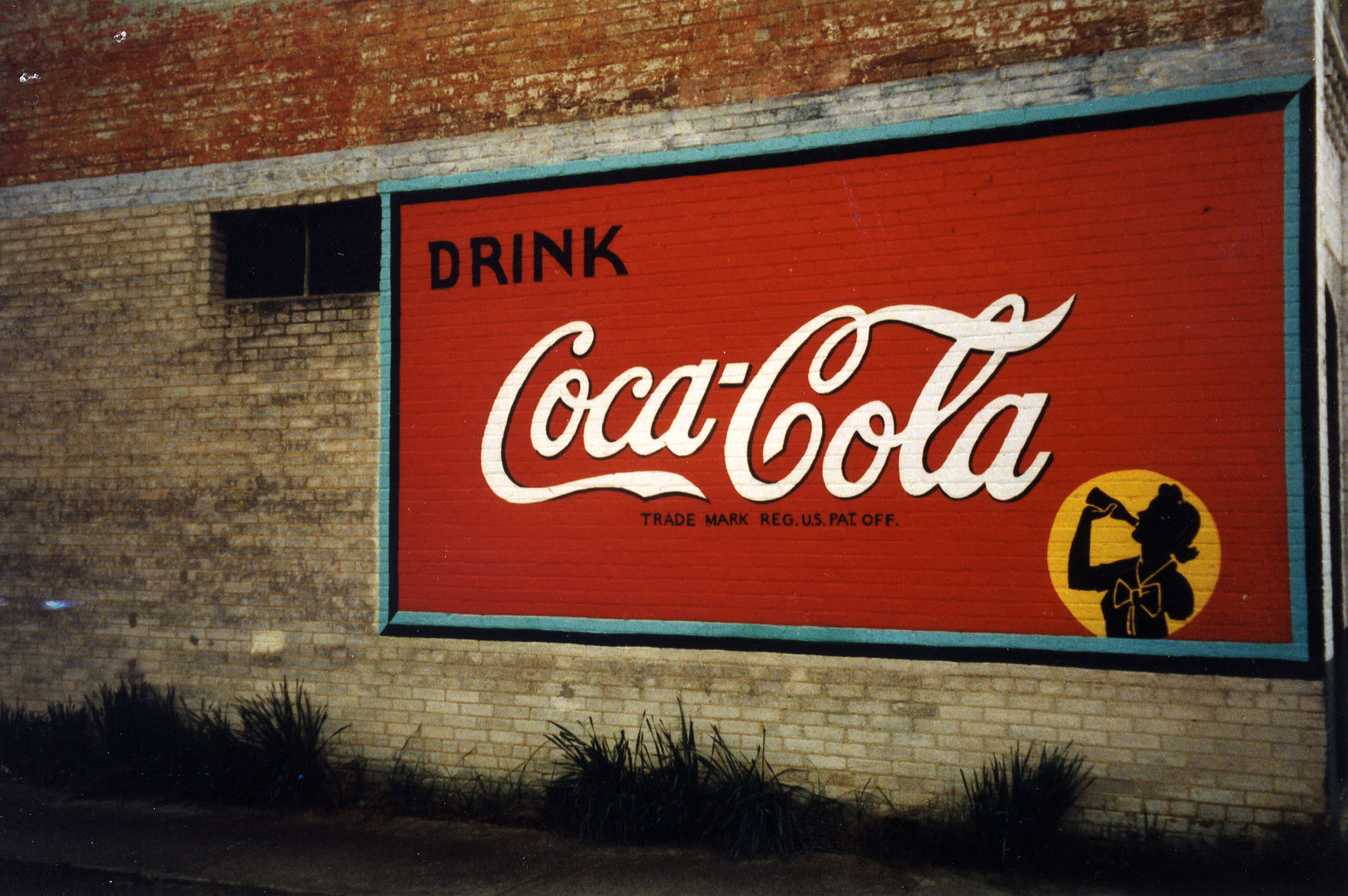
Since we think the Tipton’s acquired the grocery around 1948, they were the ones that must have put up the siding and covered the mural.
Last year the Coke archivists wrote a blog post on the history of their painted signs, discussing the guidelines they gave the bottlers. They also sent me the official book (once confidential!!) and an article on their wall painting standards. (PDFs, be sure to click through.) The article, by Professors Bill Bateman and Randy Schaeffer, is quite definitive.



 Burrito Justice